Stay Connected Anywhere With The Best International eSIM Plans
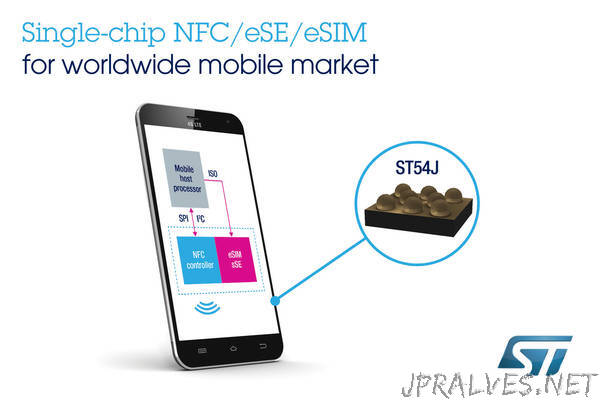
Unlike a physical SIM, an international eSIM is a digital profile embedded in your phone that lets you hop between networks worldwide without swapping cards. You activate it by scanning a QR code, then choose a data plan instantly from your device. This means you arrive abroad already connected to local networks, sidestepping pricey roaming fees and hunting for plastic SIMs in foreign shops.
What Makes Global SIM Technology Essential for Modern Travelers
Global SIM technology, specifically through international eSIMs, is essential for modern travelers because it eliminates the need for physical SIM swaps at every border. Instead of hunting for local vendors or paying exorbitant roaming fees, you instantly connect to regional networks upon landing. This means your maps, messaging, and ride-hailing apps work the moment your plane taxis to the gate, not after a lengthy search for a data plan. An international eSIM consolidates multiple country profiles onto one device, allowing seamless switching without ejecting trays or losing your home number.
For the modern traveler, true mobility isn’t about reaching a destination—it’s about having constant, reliable access from the moment you arrive, and global eSIM technology guarantees that continuity.
This direct, digital integration turns connectivity from a travel hassle into a frictionless utility.
Shifting from physical SIM cards to embedded connectivity
Swapping out a physical SIM every time you cross a border is a hassle you can finally ditch. With embedded connectivity via eSIM, your phone simply connects to local networks the moment you land, all without fumbling with a tiny card. This shift means no more hunting for a store at the airport or worrying about losing your home SIM. You just buy and activate a data plan on your device before you even leave home. The slot in your tray stays empty, but your phone stays ready for any destination.
Embedded connectivity ends the need to swap plastic cards, letting travelers activate local data plans instantly through a software profile on their phone.
Why frequent flyers are abandoning roaming plans
Frequent flyers are abandoning roaming plans because providers still charge per-day fees even when a traveler lands for just a few hours at a connecting hub, making a short stopover as expensive as a week-long stay. A single roaming pass often covers only one country, forcing users to buy multiple passes for a multi-destination itinerary. In contrast, an international eSIM allows a single profile to hold several regional data bundles, eliminating the need to swap physical cards between flights and removing the risk of surprise daily activation fees when crossing borders. The predictable global data costs of eSIMs replace roaming’s unpredictable per-use charges.
- Travelers select a regional plan once, then land in any country on the route without paying a daily roaming surcharge.
- They preload data before departure, avoiding the airport rush of searching for a local provider after clearing customs.
- When a connection delays the itinerary, eSIM data remains active across boundaries, whereas roaming plans would trigger a new day’s fee at midnight local time.
Key benefits for digital nomads and remote workers
For digital nomads and remote workers, an international eSIM eliminates the logistical drag of swapping physical SIMs across borders, ensuring uninterrupted connectivity for critical tasks. This directly supports seamless remote workflow continuity, allowing you to remain reachable on your primary number for clients and tools like Slack or Zoom without downtime.
- Instant activation for arrival in a new country, bypassing local carrier queues.
- Fixed data costs prevent bill shock while managing multiple client projects.
- Single digital profile for voice and data, preserving local contact access.
The core benefit is preserving professional accessibility and productivity from any location, removing the friction of traditional roaming or multi-SIM juggling.
How to Choose the Right Virtual SIM for Your Next Trip
When picking an international eSIM for your trip, check device compatibility first—most newer phones support eSIM, but some carriers lock them. Next, compare data packages by your destination; regional plans often beat country-specific ones. Look for apps that let you top up or switch plans mid-trip without swapping SIMs.
Avoid plans with “24-hour activation” that start immediately—choose ones that activate only when you connect to a local network.
Finally, read if calls are VoIP-only Singapore eSIM or include a real number for bookings. Prioritize providers with refund policies for unused data to avoid waste.
Comparing coverage across multiple countries and regions
When comparing coverage across multiple countries and regions for your trip, prioritize providers who publish transparent network maps, not just vague “global” claims. For reliable connectivity, cross-check coverage by specific destination using a sequence: first, verify your primary destination’s local partners (e.g., Swisscom for Alps or SoftBank for Japan); second, examine fringe areas like islands or remote transit routes; third, network density matters more than claimed country count. Then:
- List every country you will physically enter, not just layovers.
- Filter eSIM plans that explicitly cover each of those countries on a single profile.
- Compare data speed tiers (4G vs 5G) in each region’s rural versus urban zones.
Data speeds, throttling policies, and fair usage limits
When choosing an international eSIM, scrutinize real-world data speeds rather than just headline 4G/5G support, as throttling policies often slash speeds after you consume a set high-speed allowance. Fair usage limits are strictly enforced—exceeding them triggers a soft cap, reducing you to 2G or 128 kbps, which can break navigation and streaming. To avoid surprises, verify the specific speed tier (e.g., up to 100 Mbps), the exact throttle speed, and whether the cap resets daily or monthly.
- Check the exact high-speed data cap in MB/GB before throttling begins.
- Confirm the post-throttle speed (e.g., 128 kbps is far slower than 1 Mbps).
- Ensure the plan’s fair usage policy applies to your destination, not just roaming regions.
Compatibility with unlocked smartphones and eSIM-ready devices
Your phone must be unlocked by your carrier before a virtual SIM will work, otherwise it will reject the profile. Most modern flagships like iPhones (XR and newer) and Google Pixels are eSIM-ready unlocked smartphones, but double-check your model’s specs. Older or budget Android phones often lack eSIM hardware, so you’d need a physical virtual SIM instead. Avoid assuming compatibility—quickly confirm “eSIM” in your settings menu.
My phone is unlocked—will any eSIM plan work? Not always; some carriers lock devices to their own eSIM profiles, so ensure your phone isn’t SIM-locked and that your software supports remote provisioning (e.g., iOS 12.1+ or Android 10+).
Top Providers Redefining Roaming Without Borders
The concept of roaming without borders is actively redefined by providers like Airalo and Holafly, who eliminate physical SIM swaps for global connectivity. Their international eSIMs allow you to purchase and activate a local data plan in over 190 countries before you depart, bypassing carrier markups entirely. For frequent travelers, the practical advantage is immediate network access upon landing—no kiosk queues or foreign SIM trays. However, coverage quality still varies by region, so always check if your destination uses a tier-one partner network like Vodafone or T-Mobile versus a budget aggregator. This simplifies multi-country trips, as you can switch between regional plans via an app without changing your primary number, delivering true operational flexibility.
Airalo: user-friendly app with regional data packs
Airalo redefines travel connectivity through its intuitive app and regional data packs, letting you bypass physical SIM swaps entirely. Simply download the app, browse region-specific eSIMs (like “Asia” or “Europe”), and activate a plan covering multiple countries with one purchase. The interface shows real-time data usage, top-up options, and instant activation—no registration hassle. Q: How do regional packs work on Airalo? A: They bundle data across a geographic zone (e.g., 10 countries in one pack), so you stay connected from arrival without manual reprovisioning. No need to juggle local SIMs or pay surprise fees. For seamless roaming, Airalo’s streamlined dashboard and regional flexibility make it a standout choice.
Holafly: unlimited data for extended stays
For unlimited data for extended stays, Holafly is a top pick. You avoid topping up or watching GBs disappear during a month-long trip. Setup takes minutes: just buy the plan, scan the QR code, and activate. Even heavy users like digital nomads rarely hit speed caps. How to maximize it:
- Purchase the plan for your exact destination before you leave.
- Install the eSIM on your phone while connected to Wi-Fi.
- Activate once you land—data flows immediately.
This keeps you connected for work or streaming without hunting for local SIMs.
Nomad eSIM: competitive pricing for multi-country itineraries
For travelers planning multi-country itineraries, Nomad eSIM offers competitive pricing specifically designed to avoid the cost spikes of individual country plans. Its regional and global data bundles provide per-GB rates that undercut many single-country roaming options, with transparent costs displayed upfront before purchase. This pricing model particularly benefits those crossing multiple borders within a short timeframe, as the same bundle covers each destination without separate activation fees. Nomad eSIM multi-country pricing remains stable whether you visit two neighboring countries or six across a continent, making budget forecasting straightforward.
Google Fi and its seamless global integration
Google Fi makes international travel feel effortless by offering seamless global integration right from your eSIM. You can land in a new country and have data instantly, without fiddling with physical SIM swaps or hunting for local plans. Your phone just works, connecting to local networks automatically while keeping the same number for calls and texts. The pricing is straightforward—you pay the same rate for data abroad as you do at home, capped at a reasonable speed after a certain usage threshold. It’s perfect for hopping between countries, as Fi handles the connections behind the scenes, so you don’t have to think about it.
Step-by-Step Setup Guide for Activation and Usage
Before you depart, ensure your phone is unlocked and eSIM-compatible. Open the provider’s app or email after purchase; you’ll find a QR code or activation code. On your device, go to Settings > Cellular (or Mobile Data) > Add eSIM. Scan the QR code; if it fails, enter the SM-DP+ address and activation code manually. Label the plan (e.g., “Spain Trip”) and set it as your primary data line, keeping your home line for calls and texts. Upon landing, toggle data roaming on for the new plan—your eSIM will connect to local towers automatically. Always test by sending a message or loading a map.
Scanning the QR code before you leave ensures you’re not fumbling with data signals at a foreign airport.
If you need to top up, repeat this process with the new code from your provider’s account dashboard.
Scanning QR codes versus manual profile installation
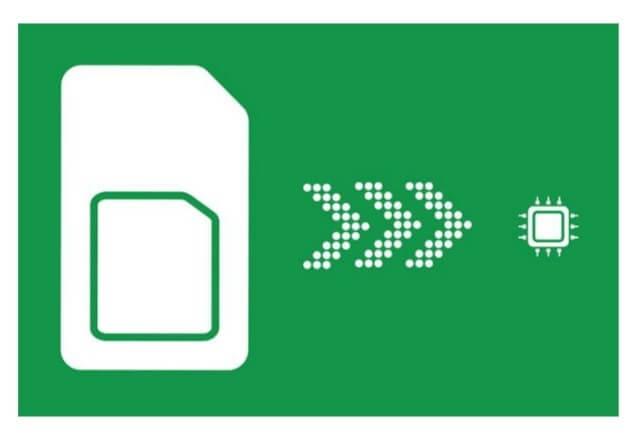
When setting up an international eSIM, scanning a QR code offers the fastest activation, automatically downloading the eSIM profile installation data within seconds. Manual profile entry, requiring you to input an SM-DP+ address and activation code, becomes essential if your device’s camera is unavailable or the QR code fails to scan. For travelers, QR scanning minimizes errors, while manual installation provides a reliable fallback when network connectivity is intermittent during setup.
| Method | Activation Speed | Error Risk | Best Use Case |
|---|---|---|---|
| QR Code | Instant (under 10 sec) | Very low | Standard smartphone setup |
| Manual Profile | 2–5 minutes | Moderate (typos likely) | Damaged screen or QR failure |
Managing multiple profiles on one device
Managing multiple profiles on one device for international eSIM use is straightforward. Most modern smartphones allow you to store several eSIM profiles simultaneously. You can typically label each profile (e.g., “Travel UK,” “Home USA”) for easy identification. To avoid billing surprises, you must designate which profile uses cellular data for internet access while keeping another for voice and SMS. This ensures efficient multi-profile management without manual swaps during travel.
- Open your device’s cellular or mobile network settings.
- Select the eSIM profile you want to use for data and enable “Turn On This Line.”
- For voice and SMS, choose a different profile as the default line.
- Toggle off unused profiles to prevent accidental roaming charges.
Switching between domestic and travel data plans
Switching between your domestic and travel data plans on an international eSIM is usually simple. Most provider apps let you toggle between your home carrier’s data and your international plan from a single dashboard. You can also do this manually in your phone’s cellular settings by reordering the preferred lines. For a smooth trip, eSIM plan switching methods are designed to be instant—just tap to activate travel data when you land, then switch back to domestic once you’re home. Always confirm your primary voice line stays on your home eSIM to avoid missed calls.
Hidden Costs and Data Pitfalls to Avoid
When using an international eSIM, the main hidden cost and data pitfall is the “data drain” from automatic background services—like map pre-loading or cloud syncing—that burn through your allowance without you noticing. Another trap is the “top-up rush,” where providers charge high fees for small emergency refills because your initial plan didn’t include a buffer.
Always disable automatic app updates and check your eSIM provider’s strict “fair usage” policy, as throttling speeds after a hidden cap can leave you stranded with unusably slow data.
Avoid buying plans with “unlimited” labels that hide a soft limit; instead, triple-check the exact gigabyte threshold before your connection gets painfully reduced.
Identifying zero-rated apps and throttled video streams
Identifying zero-rated app detection is critical when using an international eSIM, as advertised free social media or messaging access often excludes video calls or image uploads, which count against your data. Throttled video streams are another hidden pitfall; your eSIM provider may reduce video resolution (e.g., to 480p) on all traffic, even on unlimited plans. Check your eSIM’s terms for “optimized video” or “speed limits,” and test streaming resolution manually by running a fast.com or YouTube speed test. Apps like a mobile network analyzer can reveal if a connection is actively being shaped.
Always verify which specific actions are truly zero-rated and routinely test real-world video speeds to avoid unexpected throttling.
Expired plans and top-up options across different carriers
When an international eSIM plan expires, carriers handle top-ups inconsistently. Airalo lets you purchase a new data pack while retaining the old number, but your unused data is forfeited. Ubigi allows extending expired plans only within a 30-day grace period, otherwise it deletes the eSIM entirely. Holafly forces a full plan repurchase if you miss auto-renewal. This fragmentation creates a hidden cost of unused data across carriers. For example, AloSIM keeps expired plans accessible for 90 days, letting you top up without losing remaining gigabytes. Conversely, Nomad permanently removes expired profiles, requiring a fresh setup fee. Check each carrier’s revalidation policy before buying to avoid wasting paid allowances.
| Carrier | Expired Plan Access | Top-Up Method |
|---|---|---|
| Airalo | Number retained, data lost | New pack purchase only |
| Ubigi | 30-day grace period | Extension or new plan |
| Holafly | Deleted on expiry | Full repurchase required |
| AloSIM | 90-day retention | Top-up keeps remaining data |
| Nomad | Immediate deletion | Fresh eSIM needed |
Billing surprises: currency conversion and hidden fees
Currency conversion fees are a frequent source of billing surprises with international eSIMs. Your provider may convert charges at an unfavorable exchange rate, adding 3–5% without clear disclosure. Look for the base price in its native currency, not your own. Billing surprises from hidden fees often arise from small, recurring data top-ups that trigger separate conversion charges. To avoid shock, always review the final checkout total, not the advertised plan price.
- Check if the provider uses a markup on foreign exchange rates beyond the market rate.
- Verify whether refunds for unused data are processed in the same currency as purchase, which can incur a second conversion fee.
- Watch for “rounding up” charges on per-MB overage fees after currency conversion.
- Confirm if taxes or regulatory recovery fees are listed as separate line items or buried in the exchange rate.
Real-World Performance in Popular Destinations

In Tokyo, Seoul, and London, an international eSIM typically delivers reliable 4G/LTE speeds for mapping and messaging, though congested spots like Shibuya crossing can briefly cause buffering. For instance, a Reddit user noted their eSIM worked flawlessly on the Paris Metro for Spotify, but dropped to 3G near the Eiffel Tower’s base during peak hours. Q: Why does performance vary between cities? A: Local network infrastructure and carrier partnerships affect real-world speeds—Bangkok’s skytrain tunnels often see steady connectivity, while Venice’s canals may result in sporadic drops. Always check coverage maps for your specific destinations to avoid surprises.
Asia: fast LTE in Japan, South Korea, and Singapore
For travelers in East Asia, an international eSIM unlocks blazing LTE speeds across Japan, South Korea, and Singapore. In Tokyo, Seoul, and Singapore’s central core, users consistently experience sub-20ms latency and download rates exceeding 150 Mbps on local LTE networks, ensuring buffer-free streaming and instant file sharing. Even in crowded hubs like Shibuya or Myeongdong, connectivity remains stable. This performance directly rivals or surpasses many home-country carriers, making these three destinations the gold standard for eSIM technology. Q: Will an international eSIM match local carrier speeds in these countries? A: Yes, because eSIMs typically connect to the same premier Tier-1 LTE networks used by residents, so performance is virtually identical.
Europe: seamless connectivity across Schengen zones
Traveling across the Schengen area with an international eSIM eliminates the need to swap physical SIMs at each border. Instead, the eSIM automatically latches onto local partner networks, maintaining a persistent data session as you move from France to Italy to Germany. This seamless connectivity across Schengen zones ensures background tasks like map navigation and messaging continue without a drop. For practical use, follow this activation sequence:
- Install a single regional eSIM profile covering all Schengen states.
- Disable automatic network selection on your device to reduce re-registration delays.
- Verify your plan includes cross-border roaming within the zone to avoid unexpected data pauses.
The result is a unified connection that treats the entire zone as one contiguous network.
North America: rural coverage versus metropolitan speeds
In North America, the divide between blazing metropolitan speeds and sparse rural coverage is stark for international eSIM users. Cities like New York and Toronto routinely deliver 5G downloads exceeding 200 Mbps, perfect for video calls or streaming on the move. However, venture into the Rockies or rural Montana, and your connection often drops to patchy 4G or even 3G, with dead zones along highways. This inconsistency means you can’t rely on seamless navigation or quick uploads outside urban hubs. Rural coverage versus metropolitan speeds demands you pre-download offline maps and buffer media before leaving city limits. Q: Can I expect 5G in remote U.S. National Parks? A: Rarely; most parks rely on older towers, so expect slow data or no signal beyond visitor centers.
Security and Privacy Considerations for Travelers
When you pop in that international eSIM, you trade your physical SIM’s local trust for a remote profile from an unknown provider. The core risk is data handling: your traffic, location, and even text messages route through the eSIM provider’s network, so end-to-end encryption for sensitive communications is non-negotiable. Without it, a coffee-shop Wi-Fi-like exposure persists even on cellular data. I once watched a friend, thrilled by a cheap eSIM deal, log into banking—only to realize the provider’s app demanded full SMS access.
Every text or call routed through the provider becomes a readable slice of your digital identity.
Always verify if the eSIM supports encrypted local storage of your profile; a remote hack can clone your number. Disable automatic network selection too—it prevents your device from bonding with a rogue tower the provider might not vet.
Encryption standards across different providers
Encryption standards across different providers for international eSIMs vary significantly, impacting how your data is protected in transit. While many providers use AES-256 for user traffic, some may rely on less robust protocols like TLS 1.2, whereas premium services often mandate end-to-end encryption for data sessions. To verify protection, check a provider’s technical documentation for specific cipher suites. A typical sequence for assessing encryption includes:
- Confirming that the provider’s core network uses AES-256 encryption.
- Verifying that all data routes are secured with TLS 1.3 or higher.
- Ensuring the eSIM profile itself is cryptographically signed and encrypted.
These factors determine if your browsing and communication remain private across different jurisdictions.
Avoiding data leaks when using public Wi-Fi fallback
When your eSIM’s data runs low and you’re tempted by free airport Wi-Fi, public Wi-Fi fallback security is your first line of defense. Even a quick login on an open network can expose your eSIM’s traffic to packet sniffers or man-in-the-middle attacks. Before you connect, enable your device’s VPN and turn off auto-join for any unsecured networks. Never access banking or email on public Wi-Fi without the VPN active, and always verify the network name with staff—fake “Free_Airport” hotspots are common. These small habits keep your eSIM connection from leaking credentials or personal data over risky fallback links.
- Activate a trusted VPN before switching to public Wi-Fi
- Disable file-sharing and AirDrop while connected
- Use end-to-end encrypted messaging instead of plain SMS
- Forget the network after use to prevent auto-reconnect
Regulatory differences in data retention laws
When using an international eSIM, travelers must navigate differing data retention mandates by country, as these laws dictate how long telecom providers store user metadata and connection logs. A jurisdiction like the European Union may enforce retention periods of six to twelve months, while other nations might require data storage for over two years. This variance means your eSIM provider’s compliance with local law directly influences how long your location history and IP addresses remain on record. Failing to understand these differences can result in your personal data being accessible to foreign authorities far longer than anticipated.
- An eSIM user in the EU may have their metadata deleted after six months, whereas in a stricter regime the same data could be stored for 24 months
- Some countries require providers to retain traffic data for law enforcement access, even if the traveler never authorized such storage
- Data retention periods can vary by network operator within the same country, affecting the trail you leave during transit
Future Trends Shaping Borderless Connectivity
The dominant trend shaping borderless connectivity for international eSIM users is the shift toward adaptive, AI-driven network orchestration. Rather than manually selecting a regional plan, your device will soon automatically switch between local operators in real-time based on signal strength, latency, and cost optimization. This eliminates the need to juggle multiple eSIM profiles. A key insight here:
Your international eSIM will no longer be tied to a single home carrier’s roaming agreement; instead, it will behave as a native subscriber in every country, dynamically negotiating access to the best local infrastructure.
This also means your eSIM can pre-cache connectivity profiles for your next destination using predictive algorithms, ensuring instant activation upon arrival without local registration steps. The result is seamless, zero-config worldwide connection irrespective of border crossings.
Integration with IoT and wearable devices
International eSIM technology enables seamless connectivity for IoT and wearable devices across multiple countries without physical SIM swaps. Smartwatches, fitness trackers, and medical wearables can automatically switch networks based on location, maintaining constant data streams for health monitoring or navigation. IoT sensors in luggage, vehicles, or industrial equipment leverage eSIM profiles to transmit real-time telemetry across borders, eliminating roaming complexities. This integration allows automatic global network selection on small-form-factor devices, reducing battery drain by optimizing signal strength. Direct provisioning via companion apps lets users activate data plans on wearables independently of their primary phone, ensuring uninterrupted functionality during travel or remote operations.
eSIM integration empowers IoT and wearables with autonomous, cross-border connectivity, freeing devices from physical SIM constraints and enabling persistent, location-adaptive data services.
Increased competition driving lower prices and better plans
As more providers enter the international eSIM market, fierce rivalry forces carriers to slash per-gigabyte costs while simultaneously enriching plan features. You now routinely access multi-country regional bundles at prices once reserved for single-destination roaming. This race for subscribers compels operators to offer transparent, no-contract models instead of hidden daily rates. The result is a market where global data affordability improves quarterly, with basic plans often including free social media allowances or rollover data as standard differentiators.
- Regional zone passes now regularly cost 30–50% less than two years ago, often with doubled data caps.
- Top-up rates are converging with local prepaid SIM pricing, eliminating premium surcharges.
- Many providers now automatically activate the best available rate across your destinations.
Possible elimination of physical SIMs in next-gen smartphones
The possible elimination of physical SIMs in next-gen smartphones directly streamlines international travel, as you no longer need to hunt for a local SIM card upon arrival. Instead, your device instantly manages multiple global profiles digitally, making borderless connectivity activation a seamless, menu-based task. Without a physical tray, your phone gains extra space for a larger battery or advanced cooling, while the removal of the slot enhances water and dust resistance. This shift means your eSIM-capable device becomes your sole, permanent roaming companion, with no tiny plastic card to swap, lose, or damage across different countries.
- Switching between international carriers becomes a software toggle in settings.
- Phone chassis can be redesigned for improved durability and internal components.
- Eliminates the risk of losing or damaging a physical nano-SIM while traveling.
- Allows remote activation of multiple country profiles before departure.